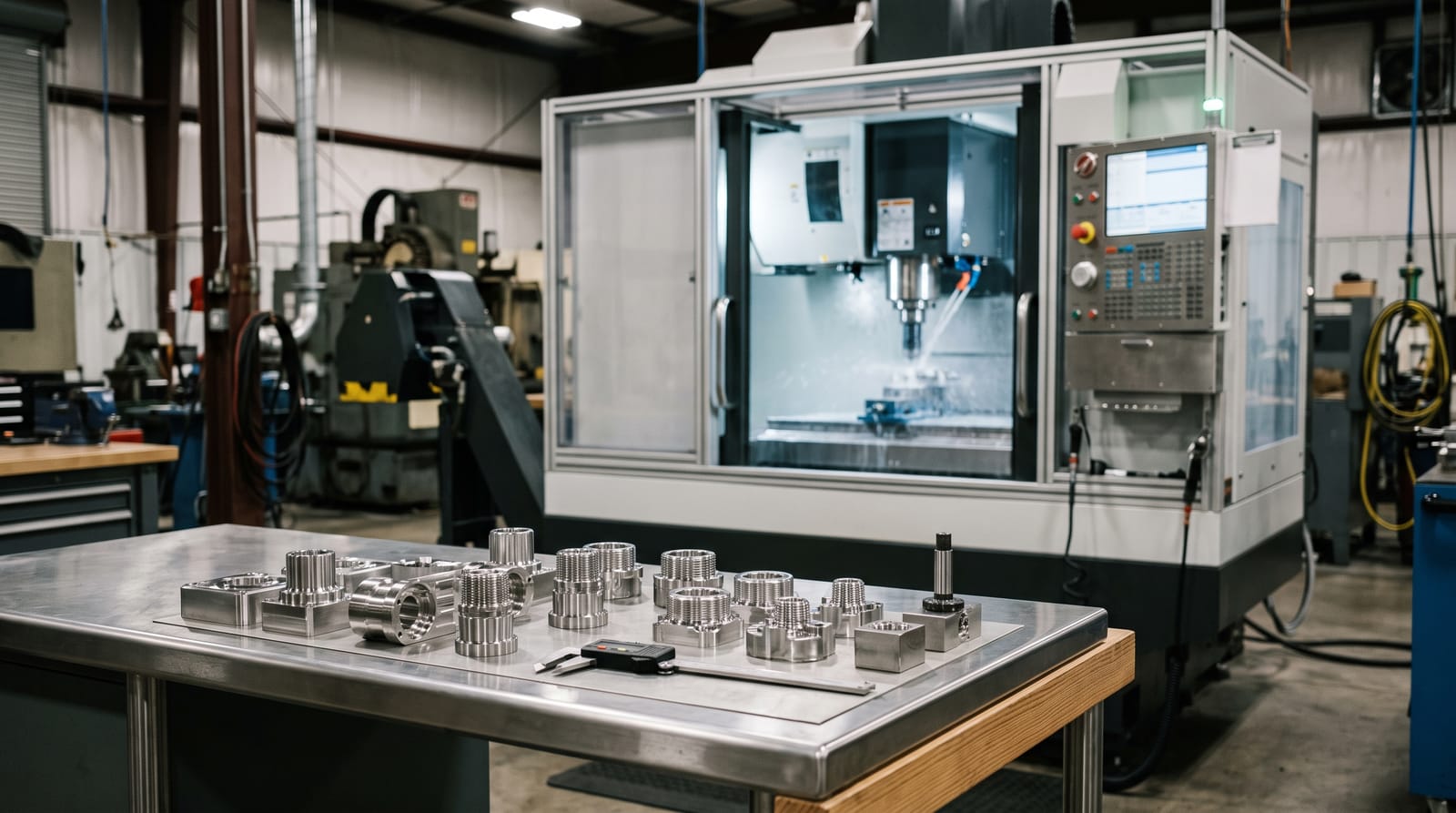
Small and mid-size Arizona manufacturers selling into the chip industry are usually asked for three records: lot traceability back to the raw material, a certificate of conformance with each shipment, and approval before changing a material, process or subcontractor. None of that requires a new ERP. It requires records that exist, stay under control and can be found fast.
What the Arizona fab build-out means for local suppliers
Since 2020, Arizona has attracted more than 70 semiconductor expansions, representing over $314 billion in investment, according to the Arizona Commerce Authority figures in the City of Phoenix's July 2026 announcement of TSMC's latest expansion. That expansion brings Taiwan Semiconductor Manufacturing Company's (TSMC) total Arizona investment to $265 billion, ENR reported, for 10 fabs, two advanced packaging facilities and a research and development center.
The Greater Phoenix Economic Council's April 2025 report, citing Semiconductor Industry Association data, says the region's semiconductor value chain has drawn more than $100 billion in investment since 2020, and counts more than 33,000 semiconductor industry jobs. The report also notes that suppliers, service and equipment providers far outnumber the fabs, and that GPEC has helped nearly 40 of those companies move to Greater Phoenix since 2021. For a local machine shop, plater or fabricator, those newcomers are potential customers and potential competitors.
Why the requirements reach small suppliers
For many small shops, the customer is not the fab itself but a toolmaker, subsystem builder or contractor that serves it, and that customer passes the fab's expectations down through its own purchase orders and quality manual. The published quality guidelines of Semsysco, an equipment maker owned by Lam Research, are a fair example: they make a zero-defect strategy mandatory and require suppliers to hold their own subcontractors to the same rules. Many small suppliers still keep their records on paper travelers and spreadsheets. That can work, as long as the records exist and can be produced on demand.
Chipmakers have reason to push. A SEMI and McKinsey supply chain analysis, reported by Semiconductor Engineering in May 2024, found that 80% of supply chain disruptions occur at the Tier 2 and Tier 3 levels, counting the chipmakers themselves as Tier 1; visibility gets poorer the further a supplier sits from the chipmaker. When something does go wrong, the clock is short: if Semsysco asks a supplier for an 8D corrective-action report, its guidelines want the immediate measures reported within one working day and an updated report setting out the long-term corrective actions within ten working days. A supplier it rates C is blocked for new orders.
The three records customers ask for
Requirements differ by customer and are set in each purchase order and quality agreement, but three records come up again and again:
- Lot traceability: the ability to trace a finished part back to its raw material heat or batch, the subcontracted steps it went through, such as plating, heat treatment or cleaning, and its inspection results, and to trace forward from one heat to every shipment that used it.
- Certificates of conformance (CoC): a signed statement with each shipment that the parts meet the drawing and the purchase order, often backed by mill certificates, subcontractor certificates and inspection reports. Semsysco's guidelines list what an inspection report must contain for the dimensions they flag on a drawing, down to the gauge used and the measured values, and expect those reports to ship with the parts without being asked.
- Change notification: written notice, and customer approval, before you change a material, process, piece of equipment or subcontractor. Intel's supplier quality page describes a tool its suppliers use to submit change forecasts for the materials, equipment and services they provide, and Semsysco's guidelines state that product or process changes are subject to approval.
One of Nutron's founders has seen what a skipped change notice costs. At Tier 2 or Tier 3, where supply chain visibility is lowest, a supplier quietly alters a process, such as switching cleaning vendors, swapping a heat of raw material or modifying a plating step. The customer, a toolmaker or the fab itself, first notices when nonconforming parts cause defects or integration failures downstream in assembly. It immediately demands an 8D corrective-action report. The supplier's quality rating is downgraded, which automatically blocks new purchase orders. To lift the block and keep the account, the supplier must put a controlled system behind each record above, including a change process that stops the job until the customer approves in writing.
One boundary. If you also make parts under Defense Department contracts, the cybersecurity rules for controlled unclassified information are a separate obligation, and they come from the contract, not from the customer's industry. DFARS clause 252.204-7012 requires NIST SP 800-171 for covered defense information and must be passed down to subcontracts that involve it. If a purchase order carries that clause, get specialist advice; it is outside the scope of this article.
You probably do not need a new ERP or an MES
The requirements quoted above describe what a record must show and how fast you must produce it, not which software keeps it. Before buying anything, check what you already own. ECI's JobBOSS², a job-shop ERP sold to small and mid-size manufacturers, lists supplier lot traceability, calibration tracking and quality workflows among its features. A shop that turns on features it already pays for may need nothing custom at all.
The best case for buying comes from the companies that sell manufacturing execution systems (MES), and it deserves a fair hearing. Siemens, writing in February 2026, cites a Gartner report, Build, Buy or Go Hybrid With Manufacturing Execution Systems, which found that packaged software tends to cover only 70% to 90% of a manufacturer's needs. Siemens' answer is to buy a strong core system and extend it where the plant is different, and for a large plant that is a sound position. For a small supplier the same finding cuts the other way: the part of the job that is specific to your shop needs custom work whichever route you take, so start from the system you already run.
Do not attempt to automate process change notifications or lot traceability if your baseline machine data relies on hand-written paper travelers with unvalidated measurements. Clean up data capture at the station level first. Automating an unvalidated paper process only produces bad records faster.
Replacing the ERP is the right call in one situation: the current system is out of support or cannot hold lot and certificate data at all. Otherwise, keep the accounting and scheduling software that works, and add small tools only where records still fall through the gaps.
Four ways to keep the records
The table compares the options a small supplier actually has, from the cheapest to the most disruptive.
| Approach | What it looks like | Where it breaks down | When it is the right call |
|---|---|---|---|
| Controlled paper and spreadsheets | Paper travelers, certificates filed by heat number, one change log with a named owner | Finding records quickly once part numbers and customers multiply | Low volume, few part numbers, one person who owns the files |
| Features already in your ERP | Lot or heat tracking, attached material certificates and inspection results in the job-shop ERP you already run | Measurements still typed in by hand from gauges and CMM printouts | Almost always the first thing to check |
| Small tools around the ERP | Inspection data flowing into the certificate package; a change log that holds a job until the customer approves | Someone has to own and maintain each connection | The ERP holds the data but the paperwork around it is still manual |
| New ERP or plant-wide MES | A program that changes how every job is planned and recorded | Cost, disruption, and a gap that still needs custom work | The current system is out of support or cannot hold lot data at all |
Where a small tool earns its place
The useful automation in a small shop is narrow. It removes the retyping between the place a record is created and the place it has to end up.
Measurements from a coordinate measuring machine (CMM) or a digital gauge can go straight into the inspection record instead of being copied from a printout. A mill test report can be read for its heat number and matched to the purchase order, with a person confirming any mismatch before the material is released to the floor. A certificate package can be assembled from records that already exist rather than rebuilt by hand for every shipment.
If retyping is where your records break down, Nutron's manufacturing operations work connects the systems a plant already runs instead of replacing them, and anywhere in the Phoenix metro we will meet you at your site or ours.
A checklist before you quote chip-industry work
Answer these with the records in front of you. A no is not a reason to buy software. It tells you which record to fix first.
1. Material and lot traceability
- Pick a part you shipped last quarter. Could you produce its material certificate, heat number and inspection record the same day a customer asks?
- Going the other way, could you list every shipment that used material from one heat?
- Are subcontracted steps such as plating, heat treatment and cleaning recorded against the lot, with the subcontractor's certificate attached?
2. Change control
- Is there one written list of what you may not change without telling the customer: material, process, equipment, subcontractor or location?
- Does someone own that list, and does a change request stop the job until the customer approves it?
- When a work instruction is revised, is the old version pulled from the floor?
3. Certificates and inspection records
- Does each certificate of conformance tie to actual inspection results, or is it a signature on a template?
- Do your inspection reports show the part and serial number, quantity checked, gauge used, tolerance, measured value, date and inspector?
- Is every gauge on those reports within its calibration date?
- Do you keep these records as long as each customer requires? Semsysco's guidelines, for one, ask for at least ten years.
Where to start
Our position: a small Arizona supplier does not need a new ERP or an MES to meet the chip industry's record requirements. It needs the three records, kept under control and easy to find, and most of that is discipline before it is software. Fix data capture at the station, use what your current system already does, and add small tools only where records still fall through the gaps. Your customers decide whether you qualify; good records make that decision easier. If the gap is the quality system itself, Arizona MEP, the state's manufacturing extension partnership, lists quality management and ISO and AS certifications among its services for Arizona manufacturers.
If you want an outside view before spending money on software, Nutron's operations audit is a two-week paid diagnostic, from $1,500. We map how records and work actually move through your shop, put an annual cost on each bottleneck, and hand you a prioritized roadmap that any competent team can carry out, ours or someone else's. It is not a certification or a compliance review.
Frequently asked questions
- What records do chip-industry customers ask suppliers to keep?
- It depends on the purchase order and the customer's quality manual, but three records come up again and again: lot traceability from a finished part back to its raw material heat or batch, a certificate of conformance with each shipment, and written notice, with approval, before changing a material, process, piece of equipment or subcontractor. Semsysco, owned by Lam Research, also requires quality records to be kept for at least ten years.
- Do small manufacturers need a new ERP to supply the semiconductor industry?
- Usually not. Published supplier requirements, such as Semsysco's, describe what a record must show and how fast it must be produced, not which software keeps it. Many shops can meet them with the ERP they already run, by turning on lot and certificate features they already pay for and adding a small tool where the ERP falls short. Replacement makes sense when the current system is out of support or cannot hold lot data.
- Does supplying the chip industry require NIST SP 800-171 or CMMC?
- Not because the customer makes chips. Those rules come from Defense Department contracts: DFARS clause 252.204-7012 requires NIST SP 800-171 for covered defense information and must be flowed down to subcontracts that involve it. If a purchase order carries that clause or a CMMC requirement, ask the customer what it covers and get specialist advice. Arizona MEP lists cybersecurity among its services.
Sources
- TSMC announces additional $100 billion investment in Arizona
City of Phoenix · 2026-07-16 · Since 2020, Arizona has attracted more than 70 semiconductor expansions, representing over $314 billion in investment (Arizona Commerce Authority figures).
- TSMC Arizona megaproject grows to $265 billion
ENR · 2026-07-22 · TSMC's total Arizona investment rises to $265 billion, for 10 fabrication plants, two advanced packaging facilities and a research and development center.
- The Future of Semiconductors | GPEC - Greater Phoenix Economic Council
Greater Phoenix Economic Council · 2025-04-22 · Citing Semiconductor Industry Association data, Greater Phoenix's end-to-end semiconductor value chain has drawn over $100 billion in investment since 2020; 33K+ semiconductor industry jobs; since 2021 GPEC has helped attract nearly 40 supplier, service and equipment companies.
- Reducing Risk In The Semiconductor Supply Chain
Semiconductor Engineering · 2024-05-23 · A SEMI/McKinsey supply chain analysis found that 80% of supply chain disruptions occur at the Tier 2 and Tier 3 levels, counting chipmakers as Tier 1; visibility becomes poorer further from the chipmaker.
- Opcenter MES for future-ready manufacturing - Siemens Digital Industries Software Blogs
Siemens Digital Industries Software · 2026-02-10 · Siemens cites Gartner's Build, Buy or Go Hybrid With Manufacturing Execution Systems: fit-for-purpose software tends to cover only 70% to 90% of a manufacturer's needs. Siemens argues for a core MES extended with low-code tools and APIs.
- Quality Assurance Guidelines (TE_0030, Revision 03)
SEMSYSCO (Lam Research) · Zero defect strategy is a mandatory requirement; QA requirements must be implemented along the supply chain; product or process changes are subject to approval; check-dimension test reports list part, serial number, inspection equipment, tolerance and measured values and ship with deliveries; 8D reports: immediate measures reported within one working day, long-term corrective actions within ten working days; C-rated suppliers are blocked for new orders; minimum ten-year retention of process and quality records.
- Supplier Quality
Intel · The Unified Change Management (UCM) tool provides a method for registered users at suppliers to submit change forecasts for the materials, equipment, and services they provide.
- JobBOSS²
ECI Software Solutions · Job-shop ERP for small and mid-sized manufacturers: incoming inspection checklist with measurements, pass/fail results, and supplier lot traceability; access documents, track equipment calibration, and manage quality workflows.
- About Arizona MEP
Arizona Commerce Authority · AZ MEP services include quality management and ISO/AS certifications; its experts can help with cybersecurity.
- 252.204-7012 Safeguarding Covered Defense Information and Cyber Incident Reporting
Acquisition.gov (DFARS) · Covered contractor information systems are subject to NIST SP 800-171; the clause must be included in subcontracts for operationally critical support or whose performance will involve covered defense information.
About the author
Software and operations engineering team
The Nutron engineering team designs, builds and integrates custom software for mid-market and enterprise operations. Based in Phoenix, Arizona, delivering across manufacturing, insurance, logistics, HR and education.
How this was made: researched and drafted with AI assistance (gemini-3.1-pro-preview for research, gemini-3.6-flash for the draft, gemini-3.1-flash-image for the photograph), then fact-checked against the sources listed above and reviewed by one of Nutron's founders before publication. Every statistic links to the primary source it came from. Read our editorial standards · Last reviewed 2026-09-30.
Related topics
Related reading

· 8 min read
Why 40% of AI Agents in Bespoke Software Will Be Decommissioned by 2027
Gartner forecasts that 40% of enterprise AI agents will be decommissioned by 2027 due to critical governance and authorization failures. Adding autonomous AI to bespoke software development requires replacing ambient RBAC with dynamic Attribute-Based Access Control to prevent lateral privilege escalation. Here is how enterprise security teams must restructure agentic access controls.

· 5 min read
Why Your Business Needs a Private RAG
Your organization's most valuable asset is its institutional knowledge — but only if your team can access it. Discover how a Private RAG system keeps your data secure while making every employee smarter, faster, and more effective.
· 1 min read
The ROI of Automating Manual Data Entry in 2026
Discover why manual data entry is a hidden drain on resources and how modern AI automation delivers immediate ROI through speed, accuracy, and employee retention.
Nutron builds custom software and process automation for operations teams, from Phoenix, AZ. See what we do and what it costs.